

Allan Gray Is Trimming Winners and Rotating Into Stocks the Market Has Given Up On
In October, Allan Gray explained a year of selling stocks that worked, from Woodside to Ramsay, to buy ones that have not. Dexus is now its third-largest holding, CSL may be next to fund the rotation, and Lendlease is gone.
14 Nov 2026 · 6 min read
In short
Allan Gray said in October 2026 that over the past year it has been trimming stocks that did well, including Woodside, Alcoa, Sims, ANZ, Woolworths and Ramsay Health Care, and adding to stocks it sees as more depressed.
The money has gone into Dexus, now its third-largest holding, as well as Amcor, Mirvac, Orora, Worley and Fletcher Building, according to Allan Gray's portfolio manager Suraj Nayak.
Allan Gray exited Lendlease, calling it one of its big mistakes, and said the lesson across companies is that its worst errors came from mistaking structural problems for cyclical ones.
Selling what worked
Allan Gray has spent the past year doing something most investors find difficult: selling the stocks that made it money. In an October 2026 presentation, the manager described the pattern plainly. “Over the last year, we've been lightening quite a few of the names that did well for us. So things like Woodside, Alcoa, Sims, ANZ, Woolworths will fall in that bucket too. And we've been adding to positions that, in our view, are more depressed.”
The winners were real. Portfolio manager Suraj Nayak told a media article in October that the fund's strong run had been fuelled by bets on CSL, Ansell, Ramsay Health Care and Woodside, which surged over the past six to 12 months and together made up 25% of the portfolio. According to the same article, Allan Gray took profits in Woodside, which boomed during the war in Iran, and in metal recycler Sims, whose share price surged 60% over the year.
Ramsay Health Care has become one of the biggest sources of cash. In its October presentation, Allan Gray called the hospital operator “almost textbook style” as an investment, after a period in which more than half of Australia's private hospitals were loss-making and Healthscope went bankrupt. The manager said Ramsay had become more efficient and that private health insurers “do seem to be moderating their stance somewhat,” so that “you can sort of see the light at the end of the tunnel.” With the share price rallying, Allan Gray said Ramsay “has been a very significant funding source for the rotation that we've seen.”
Woolworths was trimmed for a different reason. Allan Gray said the share price “has gone up quite significantly, and there's a lot now baked into its share price in terms of growth,” even though profits sit below historical averages and New Zealand and Big W are underperforming. It still regards the company as well run, but said “not all great companies are companies one needs to own necessarily.”
Over the last year, we've been lightening quite a few of the names that did well for us.
— Allan Gray, Presentation, October 2026
Where the money went
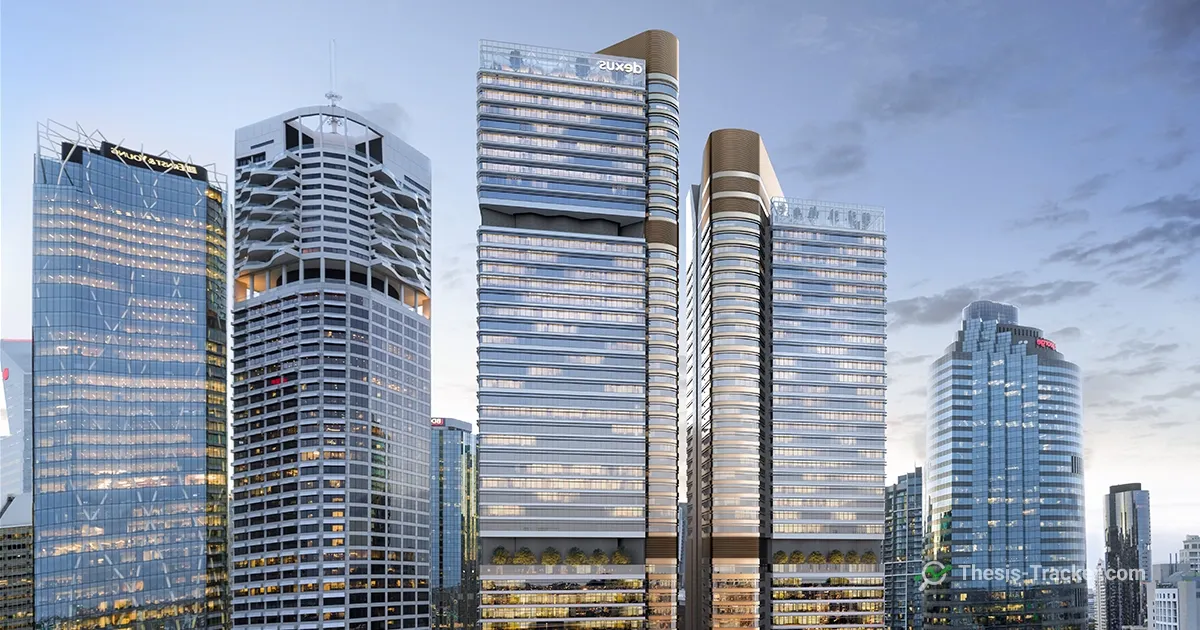
The largest recipient has been Dexus. Allan Gray said in October that Dexus “has now grown to be the third largest holding in the portfolio,” and that the office landlord's share price has fallen to a level “significantly below” independent valuations of its property. The market's fear, as the manager described it, is that AI will cost white-collar jobs, office occupancy will fall and tenants will cut space. Allan Gray's view is that this “may or may not happen,” and that if it did, many other sectors on the market would be hit harder than Dexus.
Allan Gray also argued that higher interest rates are already in the price, and that the inflation behind them would raise the replacement value of Dexus's buildings. It pointed to supply: after three Sydney office towers now near completion, the manager said, “we can't see anything between now and 2031,” adding that “usually, this is quite a good time to start investing in property.” Nayak summed up the approach in the October media article: “All those concerns are valid. But even with those headwinds, price matters.”
The rest of the rotation, according to the October article, went into stocks that have been losing money for the fund. After trimming winners, Nayak added to Amcor, Mirvac, Fletcher Building, Orora and Worley. He believes Worley will benefit from a resumption of spending in mining and oil fields once the war in Iran ends. Orora, whose share price has fallen 60% in three years and which has drawn activist investors, was also topped up. “I can understand the frustration around Orora's performance, and we share that,” Nayak said.
All those concerns are valid. But even with those headwinds, price matters.
— Allan Gray, Article, October 2026
CSL: bought cheap, now a possible source of funds
CSL shows how quickly a depressed stock can become a winner in Allan Gray's book. Nayak built the position to 6% of the portfolio after CSL's large write-downs and profit downgrade sent the shares to a decade low, according to the October media article. “It remains to be seen what their growth looks like, but the share price isn't reflecting a very optimistic trajectory,” he said at the time.
In its October presentation, Allan Gray explained that it bought CSL at 11 or 12 times earnings, when concerns about albumin sales in China, flu vaccine demand and competition in its core plasma business were so great that “people had almost put the price to one side.” The manager said many of those risks remain. “The risks are the same, it just got a little bit too cheap,” it said. With the shares now much higher, Allan Gray described CSL as a possible “reasonable funding vehicle” for other opportunities, inside or outside healthcare.
Lendlease: the admission
Not every depressed stock recovers, and Allan Gray was direct about the one that did not. In the October presentation, it described Lendlease as “one of our big mistakes” and confirmed it has sold its entire stake. Some of that capital went into Dexus.
The manager drew a wider lesson. “For all companies, our biggest mistakes have been where we mistake a structural impairment or impost for something that is more cyclical,” Allan Gray said. In Lendlease's case, it had expected a cycle that would correct. Instead, the manager now sees the development and construction business as cyclical, but the capital release unit as “very structurally impaired,” with a cost base “holding back the entire organization” and an exit that will be expensive.
For all companies, our biggest mistakes have been where we mistake a structural impairment or impost for something that is more cyclical.
— Allan Gray, Presentation, October 2026
The same test runs through Allan Gray's other commentary. It does not own Nine Entertainment, describing its broadcasting business as structurally impaired, and said it is unsure whether IDP Education's dependence on student visa policy will resolve for better or worse.
Endeavour: too early, still holding
Endeavour Group is the stock where Allan Gray is most openly testing its own rule. In its September 2026 quarterly report, the manager said it first bought the Dan Murphy's owner in late 2024 at around $4.50, and that the shares have since fallen around 30%. “At best, we were too early with our initial Endeavour investment. This is no different to being wrong,” Allan Gray wrote.
Even so, the manager is holding. It pointed to the stock trading at roughly 17 times next year's forecast earnings, earnings forecasts 36% below 2022 levels, and signs of a competitive response: Coles' liquor margins have fallen from around 4% to about 1%, and Coles plans to close some large-format stores. It also noted $300 million of planned cost savings and that new CEO Jayne Hrdlicka bought $1 million of shares on-market. “Australian liquor retail profit margins are depressed, and we believe there is room for recovery over time,” Allan Gray said.
What Allan Gray is watching
Allan Gray's portfolio is now tilted toward companies where, in its view, the market has priced in the worst: Dexus, Amcor, Orora, Worley, Fletcher Building and Endeavour. The question it has set itself, after Lendlease, is whether each one faces a cycle or a structural decline. For Dexus, it is watching office demand and the absence of new supply before 2031. For CSL, the issue is how long to keep a winner that may now fund the next turnaround.
Questions
Which stocks has Allan Gray been selling in 2026?
Allan Gray said in October 2026 that over the past year it has trimmed stocks that performed well, including Woodside, Alcoa, Sims, ANZ, Woolworths and Ramsay Health Care, and that it may use CSL as a funding source after its strong recovery. It also sold its entire stake in Lendlease.
Why is Dexus Allan Gray's third-largest holding?
Allan Gray increased Dexus to its third-largest holding because the share price sits well below independent valuations of its office property, it believes higher interest rates are already priced in, and it sees no new Sydney office supply between now and 2031 after three towers near completion.
Why did Allan Gray call Lendlease a mistake?
Allan Gray said in October 2026 that it mistook Lendlease's problems for a cycle that would correct, when its capital release unit is structurally impaired, costly to exit and carries a cost base that holds back the whole company, so it sold its stake and moved some of the capital into Dexus.
13 managers, 34 comments, with each manager's latest recorded position.
See DXS