

Austin Engineering's Turnaround Case Rests On A Renegotiated Chile Contract
Fund managers stayed patient through repeated downgrades, betting a new CEO and a fixed OEM deal can finally restore profitability
30 Jun 2026 · 6 min read
In short
Austin Engineering fell another 18% in June 2026 after a fresh earnings downgrade, though DMX Asset Management says shares now trade below net tangible assets despite the business remaining profitable.
A troubled Chilean OEM supply contract, the source of repeated downgrades since 2024, was renegotiated to commercial terms in March 2026, alongside on-market share purchases by three directors including the CEO.
Fund managers including Monash Investors and DMX Asset Management point to new CEO Sy van Dyk and an aligned former CEO on the board as reasons for continued conviction despite a share price down more than 50% over 12 months.
Few ASX small caps have tested their shareholders' patience quite like Austin Engineering over the past year. DMX Asset Management's June 2026 monthly report noted the mining truck tray manufacturer fell another 18 per cent during the month after announcing yet another operational and earnings downgrade, leaving the stock down more than 50 per cent from its 12-month high and over 75 per cent from its prior-year peak. Even so, the manager said it did not consider the latest downgrade particularly significant given how well telegraphed the company's issues have been, and pointed out the shares now trade for less than net tangible assets despite the business remaining profitable and cash flow positive.
That framing, patient but increasingly weary, has defined DMX Asset Management's commentary through repeated disappointments. In February 2026, the manager described an earnings result that missed expectations already downgraded just three months earlier, a shortfall serious enough that the ASX itself queried the company. It attributed the damage largely to a substantial OEM supply contract in Chile that had become uneconomic and was generating significant losses, while maintaining that the shares, trading at four to six times what it considered normal earnings, still held significant upside potential if profitability could be restored.
Despite its challenges, the company trades around book value, and has a fairly comfortable balance sheet. We expect they will be able to manage through their current issues, and that profitability will be restored to more normal levels.
— DMX Asset Management, Monthly Report, February 2026
The Chile contract that kept resurfacing
The roots of that Chilean problem go back to 2024, when Austin won a large contract to supply truck trays to an original equipment manufacturer in South America, a deal that grew faster than the local team's capacity to manage it. Wentworth Williamson laid out the mechanics in a September 2025 report, explaining that accepting volumes beyond the plant's expertise and labour force led to a cost blowout, a downgrade, and a roughly halved share price over the following twelve months. The manager said management had responded by bringing in experts from its better-run Indonesian and Wyoming facilities, upgrading IT systems and shifting some production to Indonesia, and expected the South American business to return to healthy profitability by financial year end.
That contract finally showed signs of resolution in March 2026. DMX Asset Management reported the company had renegotiated the problematic OEM agreement to now-commercial terms, a development it welcomed alongside news that three directors, including the CEO, had purchased shares on-market that month, even as the stock fell another 18 per cent, a decline the manager partly attributed to Austin dropping out of the All Ordinaries index rather than the operational picture deteriorating further.
A new CEO with an aligned board behind him
Much of the bull case rests on the leadership change that began in mid-2025. Monash Investors said in August 2025 that new operationally focused CEO Sy van Dyk, previously CEO of DDH1 ahead of its sale to Perenti, was supported by a board that includes former Austin CEO David Singleton, who became a substantial shareholder in the business following a lucrative options exercise and whose interests the manager said were now well aligned with other investors. DMX Asset Management made a similar point in November 2025, describing the new CEO as understated by nature and noting his predecessor remained active as a director, financially committed alongside all shareholders to generating an outcome with the business over time.
We believe Sy is the right type of leader for Austin at this point in its evolution, and we look forward to seeing what he and the company can achieve in the periods ahead.
— DMX Asset Management, Monthly Report, August 2025
Why managers keep holding on
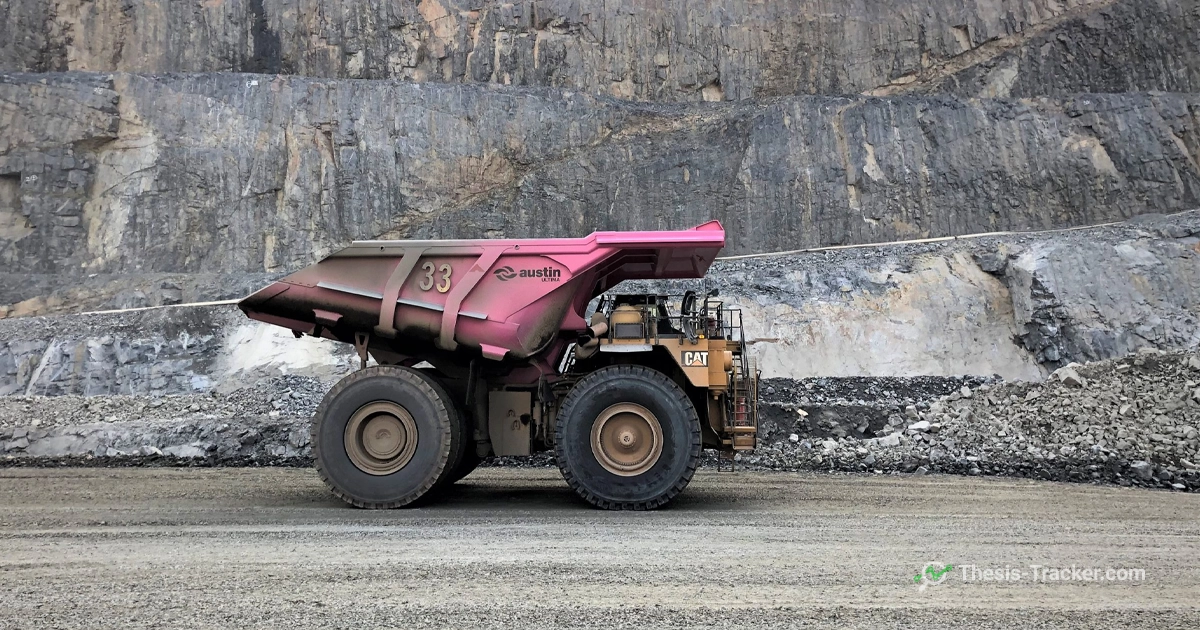
Wentworth Williamson's thesis for staying invested rests on Austin's competitive position rather than its recent execution. The manager describes Austin as the world's largest customised truck tray builder, competing against mining original equipment manufacturers like Caterpillar, Komatsu and Liebherr whose high-volume assembly lines are typically unable or unwilling to customise trays for a specific mine's geology, a niche Austin has used to build a tier-one client base including BHP, Rio Tinto and Glencore. That underlying franchise is why DMX Asset Management has continued adding to its position through the downgrades, most recently in April 2026, when it said shares appeared to find a floor as investors waited for newsflow confirming the turnaround remained on track.
What managers are watching next
With the Chilean OEM contract now renegotiated and a new CEO twelve months into the role, the near-term test for Austin is whether the December and June half-year results can finally show the working capital discipline and restored South American profitability that DMX Asset Management and Wentworth Williamson have been waiting for, and whether the on-market buyback and director share purchases prove to be a genuine signal of a turnaround rather than another false dawn in a stock that has disappointed investors repeatedly over the past eighteen months.
Questions
What caused Austin Engineering's repeated earnings downgrades?
Wentworth Williamson and DMX Asset Management say a 2024 OEM supply contract in Chile grew beyond the local team's capacity, causing a cost blowout that led to a series of downgrades and a roughly 50% to 75% decline in the share price over subsequent quarters.
Has the Chilean contract issue been resolved?
DMX Asset Management reports the problematic OEM contract in Chile was renegotiated to now-commercial terms in March 2026, a development it welcomed alongside on-market share purchases by three company directors, including the CEO.
Why do fund managers still hold Austin Engineering despite the downgrades?
Monash Investors and DMX Asset Management point to new CEO Sy van Dyk and former CEO David Singleton's continued alignment as a substantial shareholder and board director, alongside a tier-one client base and shares trading near or below book value.
10 managers, 44 comments, with each manager's latest recorded position.
See ANG