

Capricorn Metals' Reliable Growth Meets a Gold Price Correction
A sharp sell-off tested conviction in the consistently performing Karlawinda mine, leaving fund managers split on whether the correction was a buying opportunity.
7 Sep 2026 · 3 min read
In short
Capricorn Metals rallied to record highs in January 2026, then fell 23-25% through a two-stage sell-off driven first by AI-related market weakness and then a broader gold price collapse in March.
Fund managers are split between those who view growth from the reliable Karlawinda mine as already priced in and those who used the March correction to add, viewing it as a liquidity-driven event rather than a fundamental change.
Argonaut Funds Management sees Capricorn scaling production toward 500,000-700,000 ounces by 2030 alongside likely dividend growth, naming it among its preferred Australian gold names.
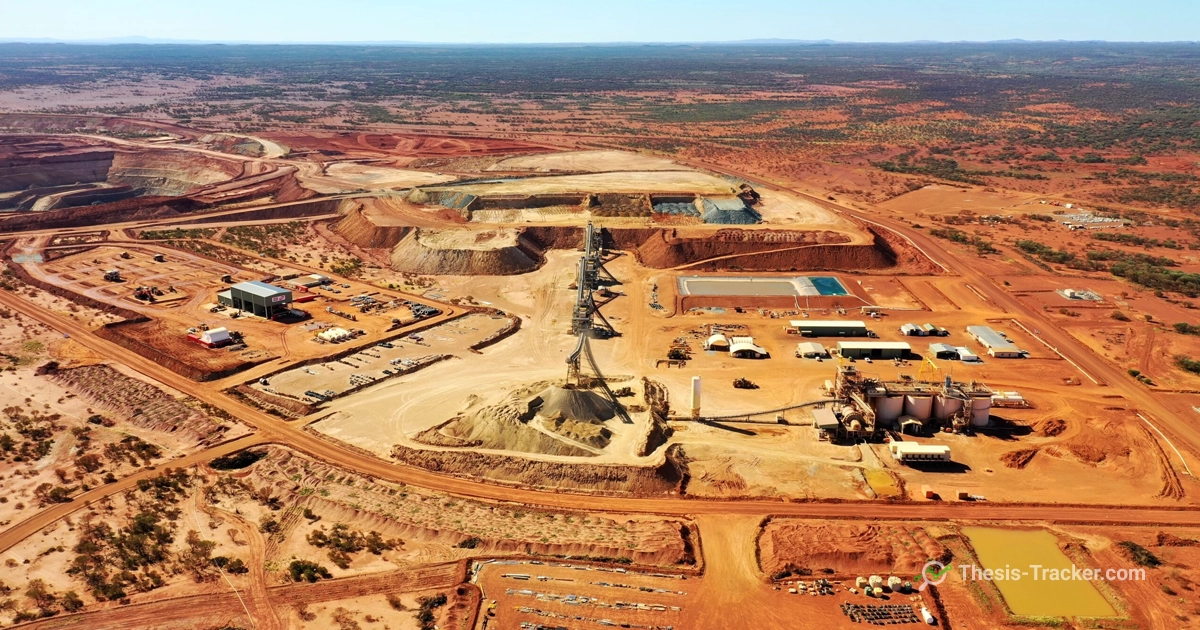
Capricorn Metals rallied to record highs in January before a sharp two-stage sell-off, first from AI-related market weakness and then a steeper gold price collapse in March, tested even its biggest backers, with fund managers split on whether growth at the reliable Karlawinda mine is already priced in or whether the correction was simply a liquidity-driven buying opportunity.
A volatile quarter tests conviction in a reliable asset
Paradice Investment Management, overweight, said calling it a volatile quarter for the share price was an understatement, with the gold price and Capricorn rallying to fresh record highs in January, followed by a sharp sell-off, first in February on the back of an AI-related drawdown, then a sharper decline in March. Perennial Partners said the stock fell 25.3 percent in March, reflecting broad-based pressure across the gold sector as bullion fell 11.6 percent during the month, sold off more heavily than most other metals. Quest Asset Partners said the stock fell 23 percent for the quarter, but used the March correction to increase its allocation, viewing it as a positioning-driven liquidity event rather than a fundamental regime change, adding at what it believes are compelling entry points for patient capital.
Capricorn Metals was weaker over the month of March, reflecting broad-based pressure across the gold sector as gold fell 11.6% during the month and was sold off more heavily than most other metals.
— Perennial Partners, Monthly Report, March 2026
Some managers exit, others double down
Alliance Bernstein exited its position, viewing Capricorn as most exposed among its holdings in a potential fuel-rationing scenario. Infinity Asset Management took the opposite approach, increasing its position to maintain a broadly neutral gold exposure.
A high-quality, if fully priced, operator
Datt Capital held at hold, describing Karlawinda as a great asset that has produced reliably at high margins for a long time, with development asset Mt Gibson currently awaiting permits, but concluding growth is already largely priced into the stock, leaving the valuation fair rather than cheap. Acorn Capital agreed, holding at hold and praising a really high-quality management team, calling Karlawinda a fantastic asset so consistent from one month to the next that it jokingly described it as potentially the most boring place to work on earth, the exact consistency driving the market's genuine affection for the asset, while the company works through an expansion it will deliver into before starting up Mt Gibson.
Karlawinda is a fantastic asset — I often joke that it'd be the most boring place to work at on earth because it's just so consistent from one month to the next, one quarter, and that's what's sort of driving the market's real love for the asset.
— Acorn Capital, Article, April 2026
A preferred pick for the long term
Argonaut Funds Management named Capricorn among its preferred Australian gold names, chosen for solid production growth and management quality, with output seen expanding toward 500,000 to 700,000 ounces by 2030 alongside likely dividend growth.
What fund managers say they are watching next is progress on Mt Gibson permitting and eventual development, delivery on the Karlawinda expansion, whether the stock's premium for consistency and quality proves justified against concerns growth is already priced in, and progress toward the 500,000 to 700,000 ounce production target by 2030.
Questions
Why did Capricorn Metals fall sharply in early 2026?
Capricorn Metals fell 23-25% through a two-stage sell-off, first from AI-related market weakness in February and then a broader gold price collapse in March, when bullion fell 11.6% and dragged down gold producers more heavily than other metals.
Is Capricorn Metals' Karlawinda mine considered a quality asset?
Yes. Acorn Capital and Datt Capital both praise Karlawinda's reliability and high margins, though Datt Capital cautions that the growth this consistency implies is already largely priced into the stock's valuation.
What is Capricorn Metals' long-term production target?
Argonaut Funds Management expects Capricorn Metals to scale production toward 500,000 to 700,000 ounces by 2030 alongside likely dividend growth, naming it among its preferred Australian gold producers.
16 managers, 24 comments, with each manager's latest recorded position.
See CMM