

Why fund managers say Dexus's AI-driven sell-off has gone too far
Fears that AI job cuts will hollow out office demand have weighed on Dexus, but several fund managers argue the discount to asset value is now too wide.
1 Jun 2026 · 6 min read
In short
Dexus trades at a significant discount to underlying asset values and replacement costs, according to SG Hiscock & Company, driven partly by AI-related office job cut fears.
AI-linked redundancies at companies including Atlassian, Wise, Block, Westpac and Telstra have removed an estimated 4,000 white-collar jobs across Australia.
A NSW Supreme Court ruling found Dexus breached its shareholders agreement in its APAC Fund, potentially forcing a sale of a 27% stake and cutting FY27 funds from operations by 3%.
Office landlord Dexus has been caught in what several fund managers describe as an overdone sell-off, driven by a combination of rate expectation shifts and fears that AI-related job cuts will hollow out demand for office space. SG Hiscock & Company's April 2026 Article argued the market is pricing in a perfect storm of work-from-home, funds management platform challenges and AI-related job concerns, and that this is overdone given Dexus trades at a significant discount to underlying asset values, long-term history and replacement costs.
AI job cuts collide with a prime office portfolio
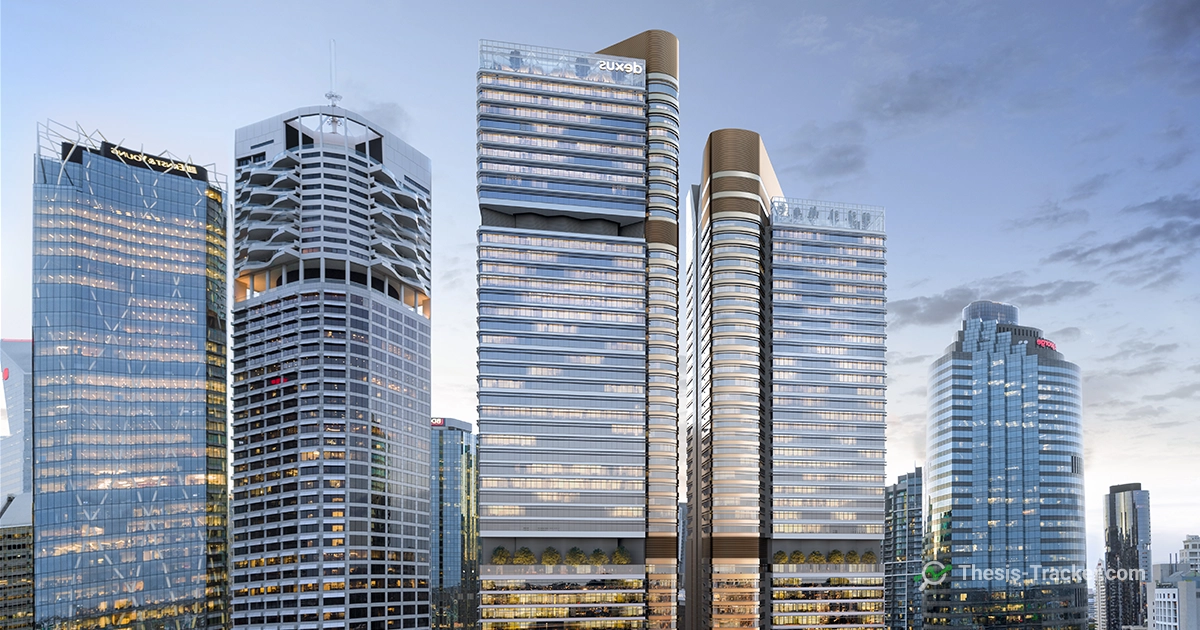
Pendal Group's March 2026 Newsletter quantified the AI redundancy trend directly affecting Dexus, noting Atlassian's announcement of job cuts totalling 10% of its global workforce, reportedly around 30% of its Australian staff, adds to a growing wave of redundancies at companies including Wise, Block, Westpac and Telstra that has removed approximately 4,000 high-end white-collar jobs across Australia. The report noted the complication for Dexus specifically: the company is building Atlassian's new 58,000 square metre Sydney office, scheduled for completion in late 2026, which it intends to sell upon completion, even as agents have already been appointed to lease a significant portion of the building.
Presumably Dexus's share price weakness is a result of changed expectations around Australian interest rates or the fears around AI's impact on office occupancy through redundancies. But AI's impact on redundancies cannot only affect Dexus.
— Allan Gray, Quarterly Report, March 2026
Allan Gray's March 2026 Quarterly Report made the contrarian case at length, arguing that if AI-driven job losses were severe enough to hollow out office demand, the same workers would also struggle to service the mortgages that make up a large share of bank lending books, a risk the market was not pricing symmetrically into bank valuations. Ellerston Capital traded the position actively through the volatility, exiting in November 2025 on rate hike concerns, reinstating it in February 2026 after a sharp sell-off, and adding further in March 2026, while Ten Cap ran the opposite view via a short position that contributed positively in March amid weak earnings growth and elevated gearing concerns.
What managers are watching next
The thesis was complicated further in June 2026 when Pendal Group reported the NSW Supreme Court found Dexus had committed a material irremediable breach of its shareholders agreement in its APAC Fund by disclosing confidential information during a sale process, potentially forcing Dexus to sell the 27% stake it manages, reducing assets under management by $4 billion and FY27 funds from operations by 3%. With a buy-back program already underway and Allan Gray's position now making up over 3.5% of its Australian equity strategy, the office sector's fundamentals and the APAC Fund legal outcome are the two threads managers are following most closely.
Questions
Why has Dexus's share price fallen?
SG Hiscock & Company attributes Dexus's share price weakness to a combination of work-from-home trends, funds management platform challenges, and fears that AI-driven job cuts will reduce demand for office space, which it views as overdone relative to the company's asset value.
How are AI job cuts affecting Dexus?
Pendal Group notes AI-linked redundancies at companies including Atlassian, Wise, Block, Westpac and Telstra have removed an estimated 4,000 white-collar jobs across Australia, with Atlassian's cuts particularly relevant since Dexus is building its new Sydney office.
What happened with Dexus's APAC Fund?
The NSW Supreme Court found Dexus committed a material irremediable breach of its shareholders agreement in its APAC Fund by disclosing confidential information during a sale process, potentially forcing Dexus to sell the 27% stake it manages and reducing FY27 funds from operations by 3%.
12 managers, 27 comments, with each manager's latest recorded position.
See DXS