

Lynas Rare Earths' Supply-Security Premium Meets a Production Reality Check
Geopolitical tailwinds drove prices and the stock to multi-year highs, before Mount Weld execution issues reminded the market that volume still matters.
6 Oct 2026 · 3 min read
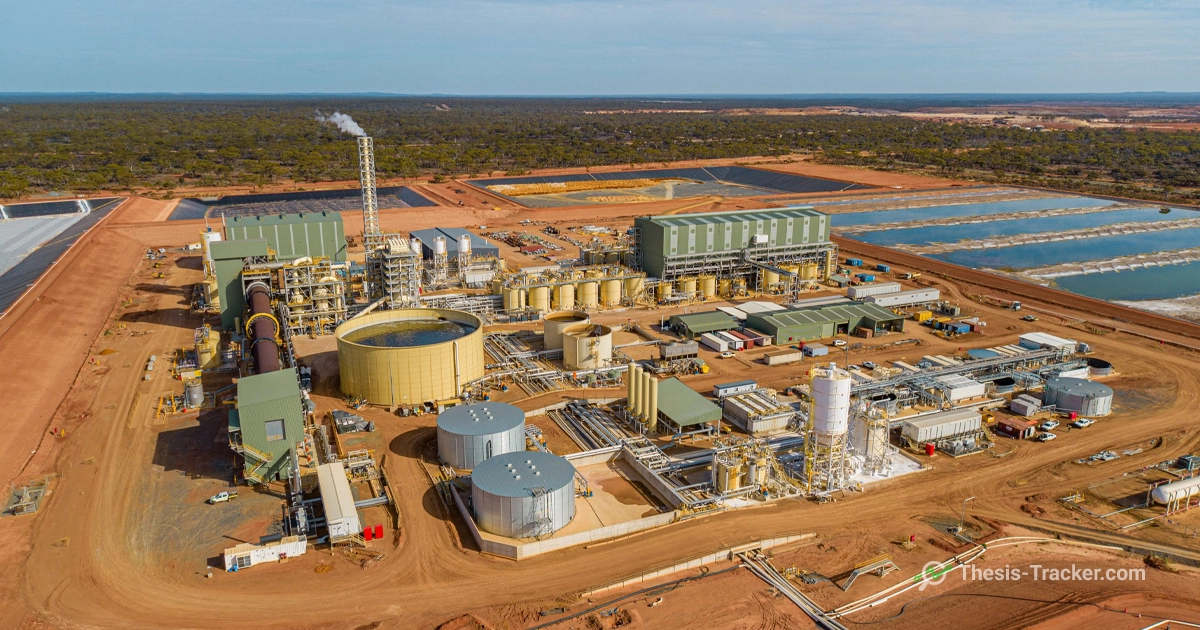
In short
Lynas Rare Earths rallied from around $12 to a peak near $22 in early 2026 as NdPr prices hit multi-year highs on governments prioritising rare earth supply security away from China.
The stock fell 22% in July after production came in 15% below consensus due to water treatment plant failures and ore quality issues at Mount Weld, even as realised prices hit a record A$98.20 per kilogram.
An August FY26 result missed on EBITDA and profit, offered no FY27 guidance beyond expecting higher production, and paid no dividend despite net cash of more than A$1 billion.
Lynas Rare Earths rallied from around $12 to a peak near $22 in early 2026 as geopolitical tensions drove neodymium-praseodymium prices to multi-year highs and governments prioritised supply chain security away from China, before a string of production misses at its Mount Weld operation and a Malaysian capex blowout pulled the stock back down through July.
A geopolitical premium builds
Yarra Capital Management said the stock outperformed in February as NdPr prices rose 25 percent to US$114 per kilogram, and while it saw material demand upside as the western world seeks to diversify away from China's supply dominance, it stayed underweight, struggling to identify value and preferring exposure to rare earths through peer Iluka Resources instead. Ellerston Capital said the rally reflected a shift in which geopolitical security of supply, rather than pure supply-demand dynamics, was driving prices higher, benefiting Lynas while rival Iluka's Eneabba processing plant remains years from production. Solaris Investment Management called Lynas a standout performer as strategic and secure supply chains became more important following conflict in the Middle East, and Wilson Asset Management made the underlying thesis explicit.
Lynas is a clear example on the ASX. As the only meaningful separated rare earth producer outside China, its strategic value has only grown as governments prioritise supply security.
— Wilson Asset Management, Article, April 2026
First Samuel drew a broader portfolio lesson from Lynas's experience, arguing the company became valuable not simply because rare earths were an interesting theme, but because it represented an alternative, non-Chinese source of supply in a market where customers and governments increasingly cared about concentration risk.
Production misses start to erode the premium
Pendal Group reported a weaker April quarterly, with production and sales missing and revenue coming in 25 percent below expectations, largely a timing issue as the Mount Weld and Kalgoorlie operations ramped up, though still a poor outcome. Heavy rare earths disappointed further, at 8 tonnes against 26 tonnes the prior quarter due to batched production, with pricing also down 1 percent quarter on quarter despite a reported 25 percent increase in average NdPr prices.
July: a recurring pattern of misses catches up with the valuation
Antares Capital said the stock fell sharply after its June-quarter update disappointed on execution, with production falling short of expectations due to operational issues at Mount Weld, despite record realised pricing, as the market reassessed the valuation premium it had been willing to pay for a company with what it called a recurring pattern of production misses. Blackwattle Investment Partners, which holds no position, confirmed the stock fell 22 percent in July after neodymium and praseodymium production came in 15 percent below consensus at 1,857 tonnes due to water treatment plant failures and ore quality issues at Mount Weld, even as the average realised price hit a record A$98.20 per kilogram. Firetrail Investments said the stock also fell on a $110 million capex blowout at its Malaysian heavy rare earth expansion, tied to inflation, engineering and commissioning issues, though the fund views this as a hit to project economics rather than the investment case, noting Lynas still closed the year with $1.2 billion in cash.
Shares fell sharply as the market reassessed the valuation premium for a company with a recurring pattern of production misses, even as rare earth prices remained elevated.
— Antares Capital, Monthly Report, July 2026
August's result: cash-rich but no guidance, no dividend
Pendal Group described a slightly weaker than expected FY26 result, with EBITDA missing by 4 percent and net profit down 11 percent, mostly on higher corporate costs and tax. Disclosure remained limited, with no FY27 guidance offered beyond a comment that production this year will be higher than FY26, and no dividend despite net cash of more than A$1 billion following a more than A$900 million capital raising in September.
What fund managers say they are watching next is whether Mount Weld's water treatment and ore quality issues get resolved so record pricing finally translates into matching production volumes, progress on the Malaysian heavy rare earth expansion despite its cost overrun, whether concrete FY27 guidance eventually emerges, and whether the geopolitical supply-security premium reasserts itself once execution stabilises.
Questions
Why did Lynas Rare Earths' share price rally so strongly in early 2026?
Lynas rallied as neodymium-praseodymium prices rose to multi-year highs, driven by governments prioritising rare earth supply chain security away from China amid rising geopolitical tensions, positioning Lynas as the only meaningful separated rare earth producer outside China.
Why did Lynas Rare Earths shares fall sharply in July 2026?
Lynas fell 22% in July after its June-quarter update showed neodymium and praseodymium production 15% below consensus due to water treatment plant failures and ore quality issues at its Mount Weld operation, despite record realised prices.
Is Lynas Rare Earths paying a dividend?
No. Lynas reported an FY26 result with EBITDA and profit both missing expectations and paid no dividend, despite holding net cash of more than A$1 billion following a capital raising in September 2025.
17 managers, 30 comments, with each manager's latest recorded position.
See LYC