

PWR Holdings' Margin Recovery Story Divides Fund Managers
A new manufacturing facility and aerospace and defence growth have split views on how much upside is already priced in
24 Apr 2026 · 5 min read
In short
PWR Holdings' NPAT margins compressed to around 8% during its Stapylton facility expansion, against a historical run-rate near 18%, with ECP Asset Management calling the gap the central earnings catalyst from here.
Airlie Funds Management built a position after the stock more than halved, citing a 65% larger follow-on aerospace and defence contract win and a cooling market it sizes at roughly US$35 billion.
Managers are split on valuation: Hayborough Investment Partners rates it a hold and Investors Mutual Limited a sell at around 45 times earnings, while Elston Asset Management expects margins to gradually rebound as the new facility scales.
ECP Asset Management's March 2026 quarterly report described PWR Holdings as a global leader in high-performance thermal management built on elite motorsport, increasingly leveraged into faster-growing adjacent sectors, principally Aerospace and Defence and Maintenance, Repair and Overhaul. The manager said motorsport was tracking toward a record year, with first-half revenue growth of 40 per cent, while the upcoming 2026 Formula One regulation shift toward roughly 50 per cent electrical power represents a technology step-change that plays directly to PWR's engineering strengths.
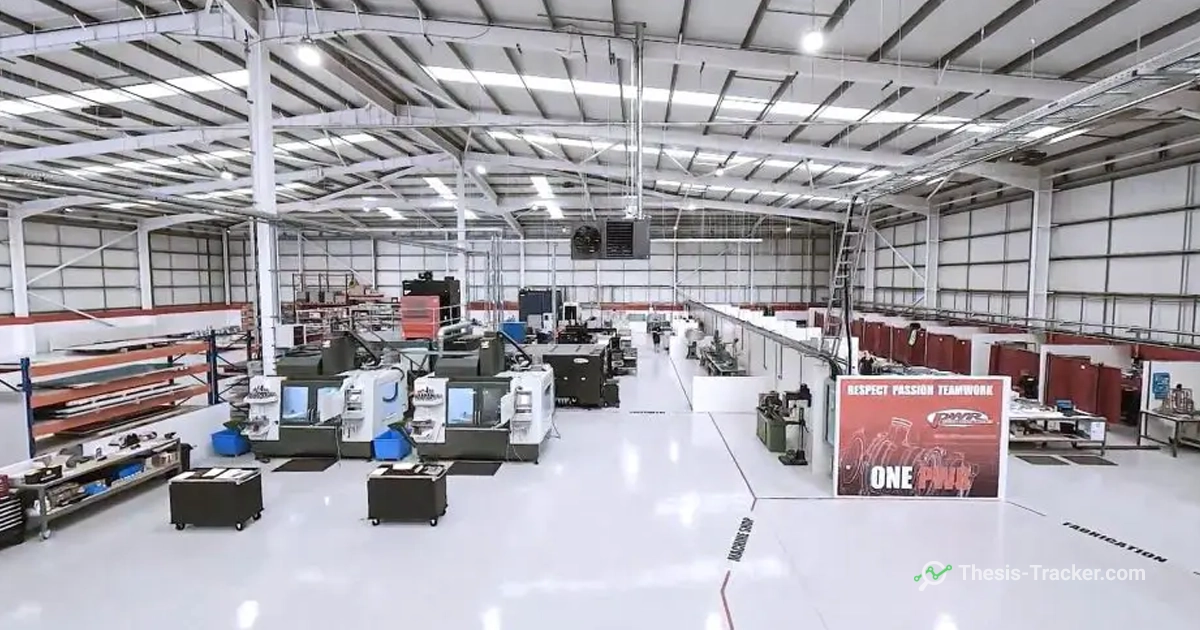
The key medium-term story remains margin recovery. PWH completed its capacity expansion into a new Stapylton facility, which is now fully operational at approximately 40% utilisation... NPAT margins have compressed to ~8% through this investment phase, against a historical run-rate closer to 18%; closing that gap is the central earnings catalyst from here.
— ECP Asset Management, Monthly Report, February 2026
A margin story built on a new facility
That margin recovery narrative centres on PWR's relocation to a new, larger manufacturing facility in Stapylton, Queensland, a move Elston Asset Management described in a September 2025 quarterly report as a huge undertaking that made FY25 a disruptive year for the business. The manager said Kees Weel, the company's founder, had historically targeted 20 per cent after-tax profit margins, averaging 20.6 per cent in the decade to FY24, and expected a gradual rebound in margins as the new facility stabilises and drives productivity, while noting the company's balance sheet, with just $12.5 million in long-term debt against $4.4 million in cash at FY25 year end, gives it capacity to manage significantly more debt if it chooses.
Airlie Funds Management took the opposite view of the Stapylton disruption's timing in a January 2026 webinar, describing PWR as best-in-class cooling instrument supplier to every Formula One team that had more recently expanded into aerospace and defence, then roughly one-fifth of revenue. The manager said the stock had more than halved before it built a position, framing the opportunity squarely as a margin recovery story, and noted a follow-on aerospace contract win in early January was 65 per cent larger than the initial contract, in a market it sizes at around US$35 billion for cooling alone.
It was really a margin recovery story. Just in early January they announced the win of a follow on contract, that contract was 65% larger than the initial contract. The aerospace and defence market is worth something like 35 billion in terms of cooling, a massive opportunity for PWR.
— Airlie Funds Management, Webinar, January 2026
A widening split on valuation
By April 2026, the valuation debate had sharpened considerably. Hayborough Investment Partners called PWR a hold rather than a buy, saying the valuation was pricing in a bit more of the aerospace and defence upside than it would like, while still describing itself as a huge fan of the business and its intellectual property. Investors Mutual Limited was more explicit in the same discussion, calling PWR a sell on valuation grounds, noting the motorsport growth outlook looked more challenged going forward and that at nearly a billion dollars in market capitalisation and 45 times earnings, investors were paying a lot for aerospace and defence upside built on only a few approved products and a track record that has included a string of earnings downgrades in recent years.
What managers are watching next
With the Stapylton facility now operating at around 40 per cent utilisation and the 2026 Formula One regulation change approaching, the near-term test for PWR is whether utilisation continues to scale toward the historical 18 per cent NPAT margin ECP Asset Management flagged as the central earnings catalyst, and whether the growing Maintenance, Repair and Overhaul segment provides the annuity-like earnings base that could justify the premium valuation bears like Investors Mutual Limited currently dispute.
Questions
Why have PWR Holdings' profit margins fallen?
ECP Asset Management says NPAT margins compressed to around 8%, from a historical run-rate closer to 18%, during the company's investment phase building a new, larger manufacturing facility in Stapylton, Queensland, which is now operating at around 40% utilisation.
Why are fund managers interested in PWR Holdings' aerospace and defence segment?
Airlie Funds Management points to a follow-on contract win in early 2026 that was 65% larger than the initial deal, within a cooling market it sizes at around US$35 billion, as evidence of a significant growth runway beyond PWR's core motorsport business.
Do fund managers agree on PWR Holdings' valuation?
No. Investors Mutual Limited rates it a sell at around 45 times earnings, arguing motorsport growth looks challenged, while Hayborough Investment Partners rates it a hold and Elston Asset Management expects margins to recover as the new Stapylton facility scales.
11 managers, 15 comments, with each manager's latest recorded position.
See PWH