

WiseTech Global's 44% slide tests conviction after DSV exit and AI disruption fears
A sector-wide rotation out of technology stocks, a 2,000-role restructuring, and the loss of its largest customer to an in-house solution have combined to test fund manager conviction in WiseTech Global, even as several holders argue the selloff has overshot the fundamentals.
24 Jul 2026 · 7 min read
In short
WiseTech Global shares fell 44.3% over a single quarter according to LHC Capital, driven by AI disruption fears across the technology sector and the announcement of 2,000 job cuts as part of an AI-focused restructuring.
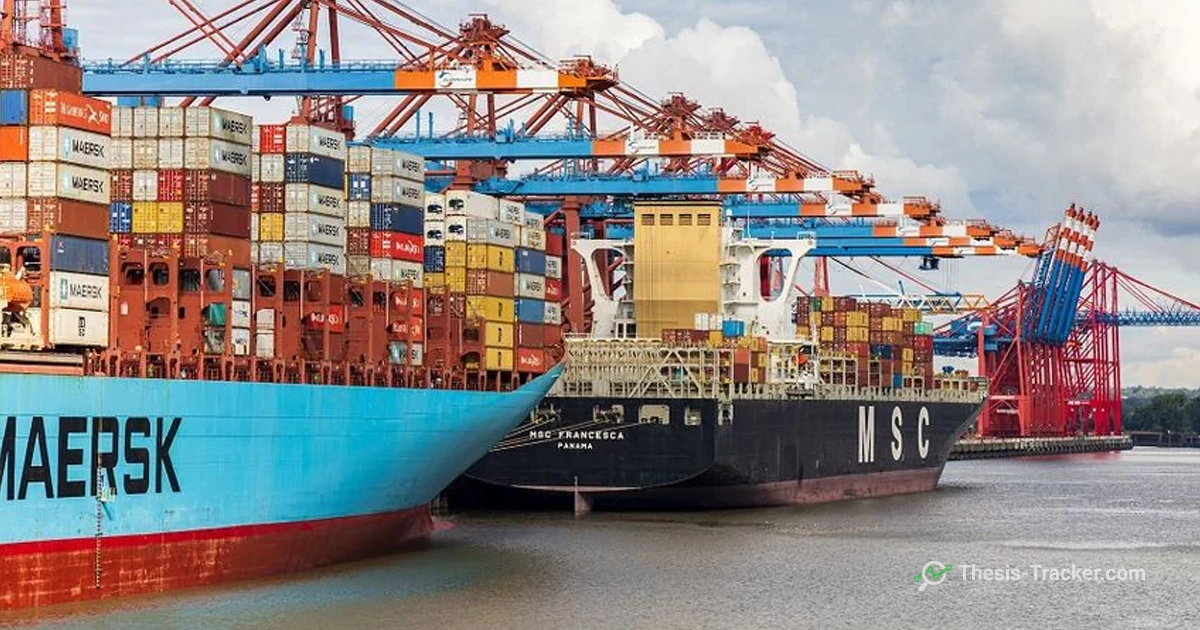
WiseTech's largest customer DSV, worth up to US$160 million in annual revenue, announced at its investor day it intends to move off the CargoWise platform onto an internal solution from 2027, a move Pendal Group says had been speculated for 12-24 months.
Blackwattle Investment Partners views WiseTech as an 'Enduring Quality' business and one of the few technology companies pivoting to face AI disruption risk directly, calling the selloff a significant investment opportunity given its contracts with 11 of the top 25 global freight forwarders.
Few ASX technology names have been more contested through 2026 than WiseTech Global Ltd (ASX: WTC), as a broad sector rotation collided with company-specific concerns over restructuring and a slowing CargoWise growth rate. Pendal Group flagged the underlying deceleration as early as March 2026, noting the business beat earnings expectations but reiterated FY26 guidance implying a downgrade to CargoWise revenue expectations from the mid-20s to the mid-teens, in a business where organic growth had already slowed from more than 30% to 9% over the prior three years.
A restructuring lands amid a broader tech selloff
The technology sector rotation compounded the slowdown concerns. Blackwattle Investment Partners reported WTC fell 18% in a single month as the rotation out of technology continued, even as the company delivered a solid result and maintained FY26 earnings guidance, alongside announcing the restructuring of 2,000 full-time-equivalent roles from AI productivity improvements and completing E2Open acquisition synergies 18 months ahead of schedule. LHC Capital captured the scale of the damage over the following quarter, noting WiseTech's share price fell 44.3%, even though it viewed the 2,000 job reductions as part of a restructuring focused on AI and margin expansion that, absent any near-term revenue impact, should translate into higher operating margins and stronger free cash flow generation.
We view WTC as an 'Enduring Quality' business, as one of the highest quality companies on the ASX, continuing their multi-decade customer and product growth journey... we see WTC as one of the few technology companies pivoting in the face of AI disruption risk.
Blackwattle Investment Partners, Monthly Report, February 2026
A vote of confidence from the CEO, and a rebound
Sentiment stabilised somewhat in April 2026. TMS Capital acknowledged AI disruption risk is a realistic long-term concern for any software business, including WiseTech, but noted the company had not announced significant workforce reductions beyond the restructuring already flagged, and pointed to WiseTech's CEO buying a million dollars of shares after the result as a signal of confidence given expected operating margin expansion. Perennial Partners reported the broader technology sector, down 24% over the prior 12 months on AI disruption fears, had become oversold enough that near-term AI risk looked more than priced in, benefiting its Wisetech position, which rose 12.4% in April, with the fund arguing AI is more likely to be an enabler than a disruptor for these kinds of businesses.
The largest customer walks
That recovering sentiment was tested again in May 2026 by a company-specific blow. Pendal Group reported WiseTech's customer DSV, listed in Europe, announced at its investor day it intended to move off the CargoWise platform onto an internal solution from 2027, following 12 to 24 months of speculation around growing public dissatisfaction between the two companies. Pendal noted DSV represents WiseTech's largest customer, worth up to US$160 million in annual revenue, and could be a meaningful headwind over the next few years, with the fund observing that the advent of AI makes it easier for large enterprise customers with strong internal IT capability to consider insourcing key operational software rather than remaining dependent on external platforms.
While the relationship between WTC and DSV appears to have deteriorated over several years, we believe that the advent of AI makes it easier for enterprise companies to consider insourcing key operational software where they have strong IT capability internally.
Pendal Group, Newsletter, May 2026
A structural bull case persists despite the noise
ELM Responsible Investments offered a more sanguine reading of the restructuring and volatility, describing WiseTech's first-half result as showing solid revenue growth and resilient margins, with a clear roadmap for its next phase as an AI-led logistics platform. The fund argued CargoWise remains a mission-critical system of record for global freight forwarders, generating rich transactional data that creates a powerful data moat as AI is applied to routing, compliance and capacity optimisation, and views recent share-price volatility as reflecting short-term debate around restructuring rather than any erosion of WiseTech's structural advantages. The fund said it remains comfortable holding WiseTech as a core, top-five position in its ANZ Conviction Fund. Separately, Pendal Group's own ESG Watchlist Assessment Panel temporarily excluded WiseTech from the investible universe for its sustainable portfolios in April 2025, setting milestones for future removal of the exclusion.
What managers are watching next
With WiseTech having lost around 44% of its value over a single quarter before partially recovering, and its largest customer now confirmed to be departing from 2027, the catalysts fund managers are watching most closely are the pace and cost of the 2,000-role AI-focused restructuring, whether other large customers follow DSV's lead toward insourcing, and whether CargoWise's data moat and top-25 freight forwarder relationships prove durable enough to sustain the margin expansion story its more constructive holders are counting on.
Questions
Why did WiseTech Global shares fall 44% in a quarter?
LHC Capital reported WiseTech's share price fell 44.3% over a single quarter, driven by a broader technology sector rotation on AI disruption fears combined with the announcement of 2,000 job cuts as part of a restructuring focused on AI and margin expansion.
Why is DSV leaving WiseTech's CargoWise platform significant?
Pendal Group notes DSV is WiseTech's largest customer, worth up to US$160 million in annual revenue, and its planned move to an internal solution from 2027 follows 12-24 months of speculation about deteriorating relations, with AI making it easier for large enterprise customers to consider insourcing operational software.
Are fund managers still positive on WiseTech Global despite the selloff?
Views are mixed but several remain constructive. Blackwattle Investment Partners views the selloff as a significant investment opportunity given WiseTech's contracts with 11 of the top 25 global freight forwarders, while ELM Responsible Investments says the volatility reflects short-term restructuring debate rather than any erosion of WiseTech's structural advantages.
41 managers, 121 comments, with each manager's latest recorded position.
See WTC