Search All
MIN
Search by Name
Search by Ticker
ASX:JHX
•
Construction Materials
James Hardie's AZEK Bet Scared the Market, Then the Results Proved It Wrong
A feared overpriced acquisition and housing cycle fears gave way to two straight guidance beats and a rally past $43.
TT
Thesis Tracker
1 September 2026
•
4 min read
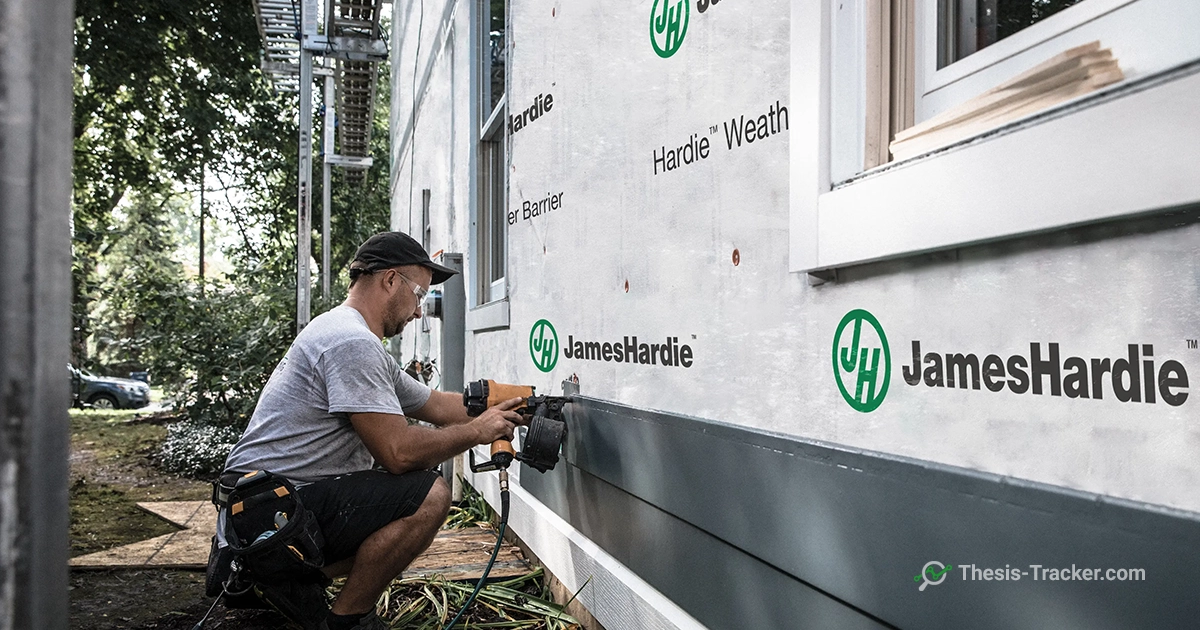
James Hardie rallied from $26 to above $43 as its AZEK acquisition, once feared overpriced, started delivering guidance beats.
In Short
James Hardie rallied from around $26 in March to above $43 by August 2026, reversing a slide that began when its 2025 AZEK decking acquisition drew market concern over timing and price.
Fund managers including L1 Capital built positions at 15-16 times forward earnings, arguing US housing starts running about 10% below mid-cycle levels meant the market was pricing a cyclically depressed earnings base at a cheap multiple.
James Hardie beat guidance twice in 2026, with US Siding and Trim revenue up 17% in its first-quarter FY27 result despite a soft US residential construction market.
James Hardie has rallied from a low near $26 in March to above $43 by August 2026, as an unpopular AZEK acquisition that had sent the stock sliding from around $55 to below $30 turned into what fund managers now describe as one of the more compelling opportunities in building materials, culminating in back-to-back quarterly results that beat guidance despite a genuinely soft US housing market.
AZEK created the opportunity, before the market saw it
L1 Capital described James Hardie as a high-quality building materials business whose 2025 acquisition of decking maker AZEK triggered a market reaction it viewed as overdone, with the stock falling from around $55 to below $30 as investors questioned both the timing and the price paid. L1 said it established the majority of its holding while the stock traded at around 15 to 16 times forward earnings. Blackwattle Investment Partners added its position in November when the stock fell for what it called technical reasons, exclusion from an MSCI index, rather than any fundamental deterioration, viewing the valuation, approaching 15 times 2027 earnings, as attractive with AZEK integration progressing well.
US housing starts today are probably about 10% below mid-cycle levels. So we think you're getting a cyclically depressed earnings base and a cheap multiple.— L1 Capital, Webinar, June 2026
A rally built on falling rates, a rival's stumble, and easing conflict
Perpetual Asset Management said the stock fell 23.7 percent from $34.22 over March as the US-Iran conflict threatened to sustain affordability headwinds, and used the weakness to add to its position in the mid-to-high twenties, before the stock returned 9.7 percent and 19.6 percent in May and June respectively as tensions eased. Pendal Group noted the rally continued even against a lacklustre prior result, helped by falling US mortgage rates on Iran peace deal optimism and by news that a competitor's owner had launched a strategic review of its decking business, underscoring the competitive advantage of James Hardie's AZEK brand in that category. Antares Capital added the stock back to its portfolio for US housing exposure, arguing falling global oil prices should ease inflation pressure on US rates over time, and describing the long-term underbuilt US housing market as an opportunity for James Hardie's earnings to rise meaningfully. L1 Capital's quarterly report put a number on the reversal, with the stock up 46 percent over the quarter on easing Middle East tensions and a constructive FY27 outlook that included a pathway back to volume growth in the core North American fibre cement business, supported by normalising channel inventory after 2025's destocking period and improving execution in repair and remodel channels.
Results start beating, not just meeting, expectations
Hyperion Asset Management and Pendal Group both flagged a July pre-announcement showing first-quarter FY27 net sales and adjusted EBITDA would exceed the high end of guidance, an 11 percent group EBITDA beat driven by much stronger than expected North American siding sales, aided by an easy prior-year comparison, AZEK revenue synergies, a competitor's market exit and better commercial execution. The August result confirmed the trend, with US Siding and Trim revenue up 17 percent despite soft residential construction conditions, driven by restocking, new distribution relationships from the AZEK deal, and market share gains in underpenetrated markets.
The company has rapidly pivoted from underperforming the market in FY26 to outperforming.— Pendal Group, Newsletter, August 2026
Bulls now argue this isn't even a housing story anymore
Wilson Asset Management rated the stock a buy in August, arguing James Hardie's story right now isn't really linked to the housing cycle, and that as the market broadens out beyond a narrow, crowded pocket of AI growth names, quality businesses with their own earnings drivers like James Hardie could benefit, crediting management's renewed focus on execution. L1 Capital separately grouped James Hardie with BlueScope as names with significant US earnings exposure that investors have increasingly rewarded as US economic conditions improve.
Not everyone is convinced yet
Investors Mutual Limited stayed at hold, noting the repair and remodel segment that makes up the majority of James Hardie's business looks fine when funded from cash flow, and growth is starting to show through, but home equity line of credit borrowing used to fund renovations carries interest rates around 8 percent, a cost the fund considers hefty enough to limit enthusiasm for the current multiple until interest rates come down.
What fund managers say they are watching next is whether Siding and Trim market share gains and AZEK synergies keep compounding, whether US interest rates fall enough to ease the cost of HELOC-funded renovations, delivery against the upgraded full-year guidance, and whether the long-term underbuilt US housing thesis several managers cite proves out as a structural tailwind beyond this year's cyclical bounce.
Price
Price
Price
Price
Market cap
12 managers
Sector
12 managers
Fund managers
12 managers
First covered
12 managers
Last updated
12 managers
Company Details
ic
Ipsum Capital
6 comments
ic
Amet Funds
4 comments
ic
Dolor
3 comments
Top Investors Covering MIN
Related Themes
Frequently asked questions
Frequently asked questions
Why did James Hardie's share price fall before its 2026 rally?
James Hardie fell from around $55 to below $30 after its 2025 acquisition of decking maker AZEK drew investor concern over the timing and price paid, before US-Iran conflict fears pushed the stock down further to around $26 in March 2026.
What drove James Hardie's rally back above $43?
James Hardie's rally was driven by easing Middle East tensions, falling US mortgage rate expectations, progressing AZEK integration, and two consecutive quarters of results beating guidance, including 17% US Siding and Trim revenue growth.
Why are some fund managers still cautious on James Hardie?
Investors Mutual Limited notes that renovations funded through home equity lines of credit carry interest rates around 8%, a cost it considers high enough to limit enthusiasm for James Hardie's current valuation until interest rates fall.